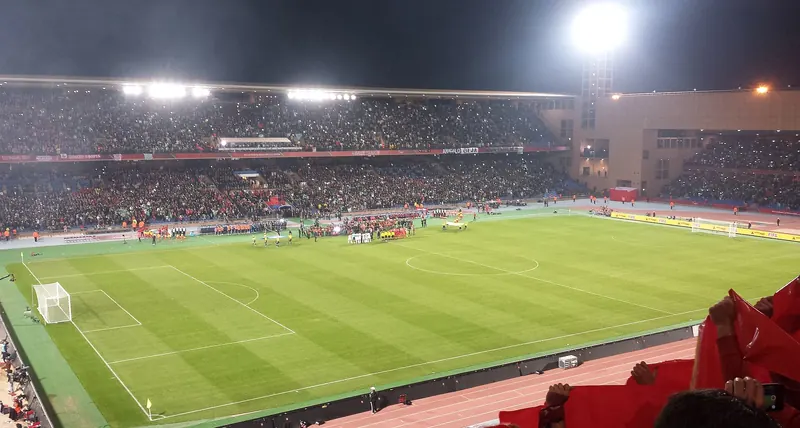
Grand Stade de Marrakech: visitor guide
Host of two Club World Cup finals and Africa Cup of Nations matches, Marrakech's stadium is being rebuilt as a football-only, fully covered arena for 2030.
Published 26 October 2026 · By Hicham, World to Morocco
The Grand Stade de Marrakech lies about 11 km north of the city centre. It opened in 2011 and seats about 41,000 after its 2024–2025 renovation; a second phase, due to finish by the end of 2028, will remove the athletics track, add a full roof and raise capacity to about 46,000 for the 2030 World Cup. There is no train or tram: go by taxi or official shuttle, allowing 20–30 minutes from the medina.
Marrakech is likely to be the busiest host city for tourists, and its stadium sits well outside the old town, in the newer districts that spread north of the city. The ground is familiar to football fans: it staged the FIFA Club World Cup finals in 2013 and 2014 and matches of the 2025 Africa Cup of Nations.
The version fans see in 2030 will look different. After a first phase of works finished in June 2025, the stadium is being turned into a football-only, fully covered arena.
Location
The stadium stands about 11 km north of central Marrakech and around 14 km from Marrakech Menara airport. The medina, Gueliz and Hivernage are all to the south; the Palmeraie, with its resort hotels, spreads across the north-east of the city.
Capacity and the 2030 upgrade
Capacity figures vary between sources because the stadium is mid-renovation. The Africa Cup of Nations organisers, CAF, list 41,245 seats; older figures give 45,240. The stadium operator SONARGES describes the plan for 2030:
| Phase | When | What changes |
|---|---|---|
| Phase 1 | Early 2024 – June 2025 | New pitch, seats, changing rooms and media areas, seven VIP lounges, 15 skyboxes, a 180-seat panoramic restaurant, 77 turnstiles; about MAD 400 million |
| Phase 2 | After the 2025 Africa Cup of Nations – end of 2028 | Athletics track removed, stands moved closer to the pitch, full roof, octagonal shape; capacity about 46,000 |
Capacity figures are taken from SONARGES via Yabiladi/MAP (September 2025) and CAF. We will update them when the second phase is complete.
How to get there
- Taxi: the simplest option. Allow 20–30 minutes from the medina or Gueliz outside peak traffic, more on matchdays. Agree the return trip with your driver in advance or book a transfer, as taxis are scarce after the final whistle.
- Shuttles: official matchday shuttles for 2030 have not been announced. Check with your hotel and the city's announcements closer to the tournament.
- Train: the stadium is not on the rail network. Marrakech station, in Gueliz, has trains from Casablanca (about 2h40) and Rabat; a high-speed line from Kenitra to Marrakech is under construction.
Read our guide to getting around Morocco for trains between host cities.
Where to stay
- Gueliz and Hivernage: modern hotels, easy taxis and late-night restaurants, on the stadium side of the medina.
- The Palmeraie: resort hotels with large pools in the north of the city, good for families in the heat.
- The medina: the classic riad experience, but the longest journey to the stadium and taxis only reach the edge of the old town.
Compare areas in our guide to hotels near the World Cup stadiums, or see where to stay in the Marrakech travel guide.
Matchday tips
- Heat is the main issue: Marrakech averages 34°C in June and 38°C in July, and evenings stay warm.
- Bring water, a hat and sunscreen for afternoon kick-offs; the roof will only be complete after the 2028 works.
- Leave earlier than you think; traffic on the roads north of the city builds fast before big matches.
- Alcohol is not sold in the stadium.
- After the match, eat in Gueliz or Hivernage, where restaurants stay open late.
Things to do in Marrakech
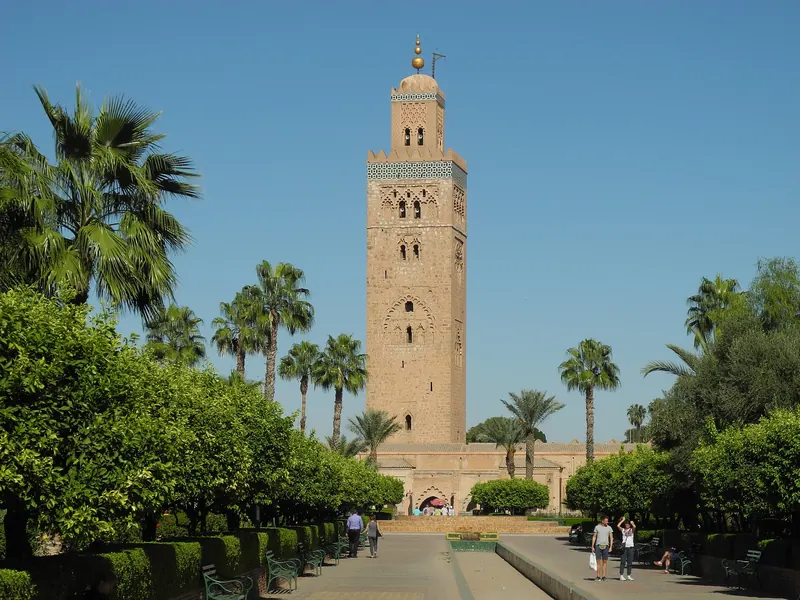
Between matches, explore the souks and Jemaa el-Fna square, visit the Bahia Palace and the Jardin Majorelle, and take a hammam. When the heat gets too much, escape to the Atlas Mountains, about 90 minutes away and noticeably cooler, or to the Atlantic breeze of Essaouira. Our Marrakech travel guide has the full list.
Its role at the 2030 World Cup
Marrakech is one of six Moroccan host cities. FIFA has not yet published the match schedule. Compare the venue with the others in our stadium guide.
Sources
- Yabiladi (MAP): Marrakech Grand Stadium gets major upgrade (3 September 2025)
- CAF: Fact sheet, Marrakech
- Wikipedia: Marrakesh Stadium (location, opening, events)
- NSS Sports: AFCON 2025 stadium guide
- Climate normals for Marrakech Menara, 1991–2020
Last checked 26 October 2026. Stadium figures change as work progresses; we update this page when official sources do.
Frequently asked questions
How far is the Grand Stade de Marrakech from the medina?
It is about 11 km north of the city centre: allow 20–30 minutes by taxi outside peak traffic, and more on matchdays.
What is the capacity of the Grand Stade de Marrakech?
About 41,000 after the 2024–2025 renovation (older figures give 45,240). The second phase of works is planned to raise it to about 46,000 for 2030.
Is there a train to the Marrakech stadium?
No. Take a taxi, a pre-booked transfer or official shuttles if they are announced for the tournament.
Where should I stay for a match in Marrakech?
Gueliz and Hivernage are the most practical, with easy taxis and late restaurants. The Palmeraie suits families who want a big pool.