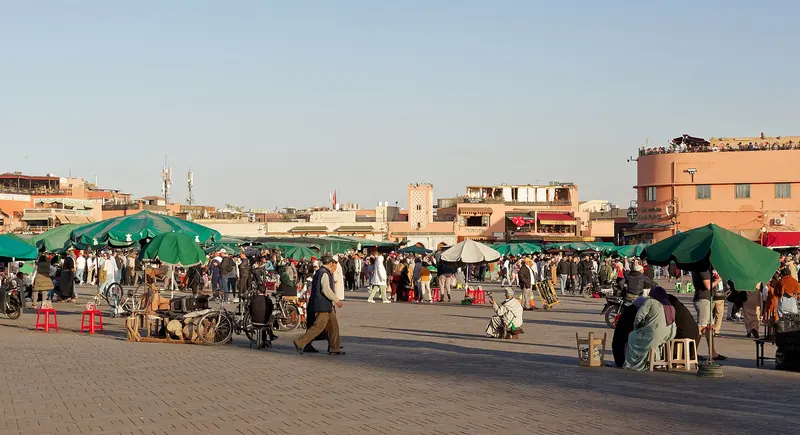
The Morocco 2030 fan survival guide
Heat, trains, cash, SIM cards and match-day etiquette — everything we'd tell a friend before they fly.
Updated 22 October 2026 · By the World to Morocco editorial team
For a smooth World Cup trip to Morocco: check visa rules early, book accommodation the moment you have tickets, travel between cities by train, carry some cash in dirhams, buy a local eSIM or SIM and plan for strong summer heat inland. Morocco is welcoming and football-mad — you're in for a treat.
1. Beat the summer heat
June and July are hot. Marrakech and Fes regularly reach 35–40°C in the afternoon, while coastal Casablanca, Rabat, Tangier and Agadir usually stay in the mid-20s thanks to Atlantic breezes. Do sightseeing early in the morning, rest in the afternoon like locals do, drink plenty of water and wear light, loose clothing. See our weather guide for each host city.
2. Move between host cities by train
Al Boraq high-speed trains already link Tangier, Kenitra, Rabat and Casablanca, and the extension to Marrakech is planned for 2030. Conventional ONCF trains reach Fes and Marrakech; CTM and Supratours coaches cover Agadir and the south. During the tournament, book train seats as early as possible. Full transport guide →
3. Money: carry some cash
Cards are accepted in hotels, malls and many restaurants, but taxis, souks, cafés and small shops often prefer cash. ATMs are widely available in all host cities. Exchange money at banks or official bureaux — and keep your receipts if you want to convert dirhams back. Money guide →
4. Stay connected
Maroc Telecom, Orange and inwi sell prepaid SIM cards with generous data at airports and shops (bring your passport). eSIMs are an easy alternative to set up before you fly. Wi-Fi is standard in hotels, riads and cafés.
5. Alcohol and etiquette
Morocco is a Muslim country with a relaxed approach to visitors. Alcohol is served in licensed hotels, bars and restaurants, but drinking in public places and stadiums isn't allowed. Dress is relaxed in cities, though covering shoulders and knees is respectful in medinas and essential for mosque visits. A few words of Darija — salam (hello), shukran (thank you) — go a long way. Etiquette guide →
6. Getting around inside cities
- Petit taxis (small, colour-coded by city) are cheap for short trips — insist on the meter.
- Trams run in Rabat-Salé and Casablanca.
- Ride-hailing apps operate in larger cities; check which apps are licensed on arrival.
- Medinas are best explored on foot; accept offers of guidance only from official licensed guides.
7. Stay safe and healthy
Morocco is generally safe for visitors. Watch for pickpockets in crowds, agree prices before services, drink bottled or filtered water if you have a sensitive stomach and get travel insurance that covers medical care. Safety guide →
8. Fan zones and watching matches
Host cities are expected to run official fan festivals with big screens, music and food. Otherwise, every café in Morocco becomes a stadium on match days — find one with a terrace, order a mint tea and join the crowd.
Frequently asked questions
Do I need a visa to visit Morocco for the World Cup?
Citizens of the EU, UK, USA, Canada, Australia and many other countries can enter visa-free for up to 90 days. Others may need an e-visa or consular visa. Check our visa guide and official sources before booking.
What should I wear in Morocco as a football fan?
Team shirts are fine everywhere. In medinas and religious sites, cover shoulders and knees out of respect.
Is it hot in Morocco in June and July?
Inland cities like Marrakech and Fes often reach 35–40°C. Coastal host cities such as Casablanca, Rabat, Tangier and Agadir are much milder, usually 24–28°C.
Can you drink alcohol in Morocco?
Yes, in licensed hotels, bars and restaurants. Drinking in public and in stadiums is not permitted.