Moroccan culture and etiquette
Moroccans are famously hospitable. A little cultural knowledge makes every encounter warmer.
Updated 22 October 2026 · By the World to Morocco editorial team
Greet people with "Salam alaikum", dress modestly in medinas, ask before photographing people, eat and pass food with your right hand, and remember that most mosques are closed to non-Muslims (Casablanca's Hassan II Mosque is a notable exception).
Useful phrases
| English | Darija (Moroccan Arabic) | French |
|---|---|---|
| Hello | Salam alaikum | Bonjour |
| Thank you | Shukran | Merci |
| Yes / No | Iyeh / La | Oui / Non |
| How much? | Bshhal? | C'est combien ? |
| No, thank you | La, shukran | Non, merci |
| Goal! | Gooool! | But ! |
Dos and don'ts
- Accept mint tea when offered — it's a sign of hospitality
- Use your right hand for eating and giving
- Ask permission before photographing people
- Dress modestly in medinas and rural areas
- Avoid public displays of affection
- Don't criticise the monarchy or religion
Food culture
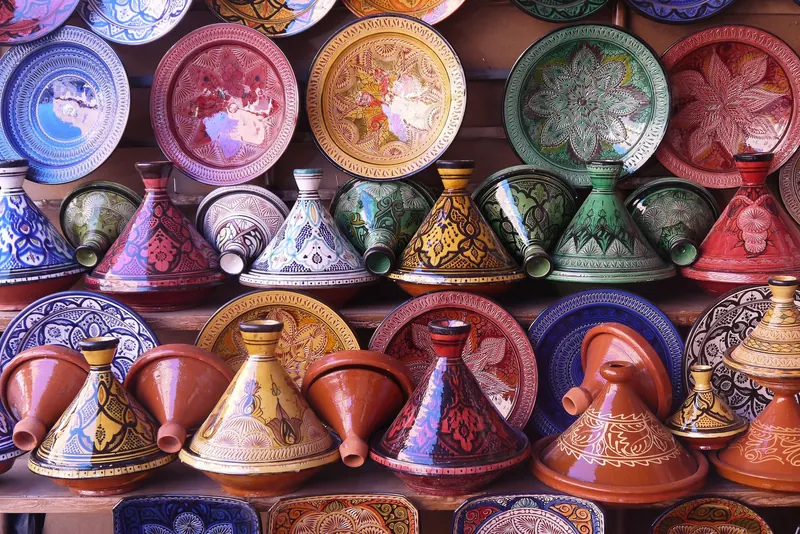
Couscous is traditionally served on Fridays, tagines are slow-cooked in conical clay pots, and pastilla mixes sweet and savoury in flaky pastry. Bread is sacred — never waste it. Try harira soup, msemen pancakes, fresh orange juice and, of course, sweet mint tea poured from a height.
Frequently asked questions
What language is spoken in Morocco?
Arabic and Amazigh (Berber) are official. Most people speak Moroccan Arabic (Darija); French is widely used, Spanish is common in the north and English is increasingly spoken in tourist areas.
What should tourists wear in Morocco?
Light, comfortable clothes. In medinas and religious sites, covering shoulders and knees is respectful. Beachwear is fine at the beach and pool.